
Collagen has become one of the most talked-about supplements in the wellness and beauty world. You’ve probably seen it blended into smoothies, stirred through coffee, added to skincare routines and featured all over your feed. But what actually is marine collagen? And how do you use it in real life?
While it’s often marketed as a go-to for hair, skin and nails, collagen isn’t just a beauty supplement. It’s a key structural protein that supports your skin, joints, connective tissue and overall wellbeing especially as natural collagen production begins to decline with age.
That’s why we asked Heidi from Heidi Rose Nutrition to break down why collagen matters, and to share some of her favourite ways to incorporate our Happy Way Marine Collagen range into your everyday routine.
WHAT IS MARINE COLLAGEN?
 Collagen is the most abundant protein in your body.
It’s found in your:
- Skin
- Hair and nails
- Joints and ligaments
- Bones
- Connective tissue
Marine collagen is collagen sourced from fish and then broken down into collagen peptides, making it easier for your body to absorb and use. Research shows collagen peptides can support skin structure, tissue repair and bone health by stimulating the cells responsible for building collagen in the body.
WHY DO PEOPLE START TAKING COLLAGEN?
 One of the reasons collagen has become so popular is because our natural collagen production gradually changes as we get older.
Over time, this may show up as:
- Skin changes and fine lines
- Joint stiffness
- Slower recovery from exercise
- Changes in hair and nails
This is why collagen supplements have become so popular, they’re a simple way to support the body’s natural collagen production as we age.
WHO MIGHT BENEFIT FROM COLLAGEN?

You don’t need collagen to be healthy. But many people choose to include it as an extra layer of support, especially if they want to support:
- Skin health and ageing
- An active lifestyle and joint/tendon support
- Hair and nail strength
- Connective tissue and bone health
HOW MUCH COLLAGEN SHOULD YOU TAKE?
Most research on collagen peptides uses 2.5–10 g per day, with many studies sitting around 5g daily. When it comes to collagen, consistency matters more than timing.
Important to note, collagen is NOT a complete protein. This is one of the biggest misconceptions.
Collagen is rich in glycine and proline (amino acids that support skin and connective tissue), but it does not contain tryptophan, which is an essential amino acid needed for building muscle and supporting recovery.
So collagen shouldn’t replace your normal protein intake, think of it as a supportive add-on, not your main protein source. This is why pairing collagen with a complete protein is a great idea (such as a whey protein).
HOW TO TAKE MARINE COLLAGEN? (EASY IDEAS)

One of the best things about collagen peptides is how easy they are to use. They dissolve in hot or cold liquids and have a very neutral taste, so they fit easily into your routine.
Here are some simple ways to add Happy Way’s Marine Collagen in:
- Add it to post-workout smoothies: Pair collagen with a complete protein like Happy Way Vegan protein or Whey protein, or mix it into foods like yoghurt, oats, nuts, nut butter or eggs. This gives you the full amino acid profile your muscles need after training.
- Stir into coffee or matcha: A super easy daily habit stack.
- Mix into yoghurt or overnight oats: Stir it through breakfast and you won’t even notice it.
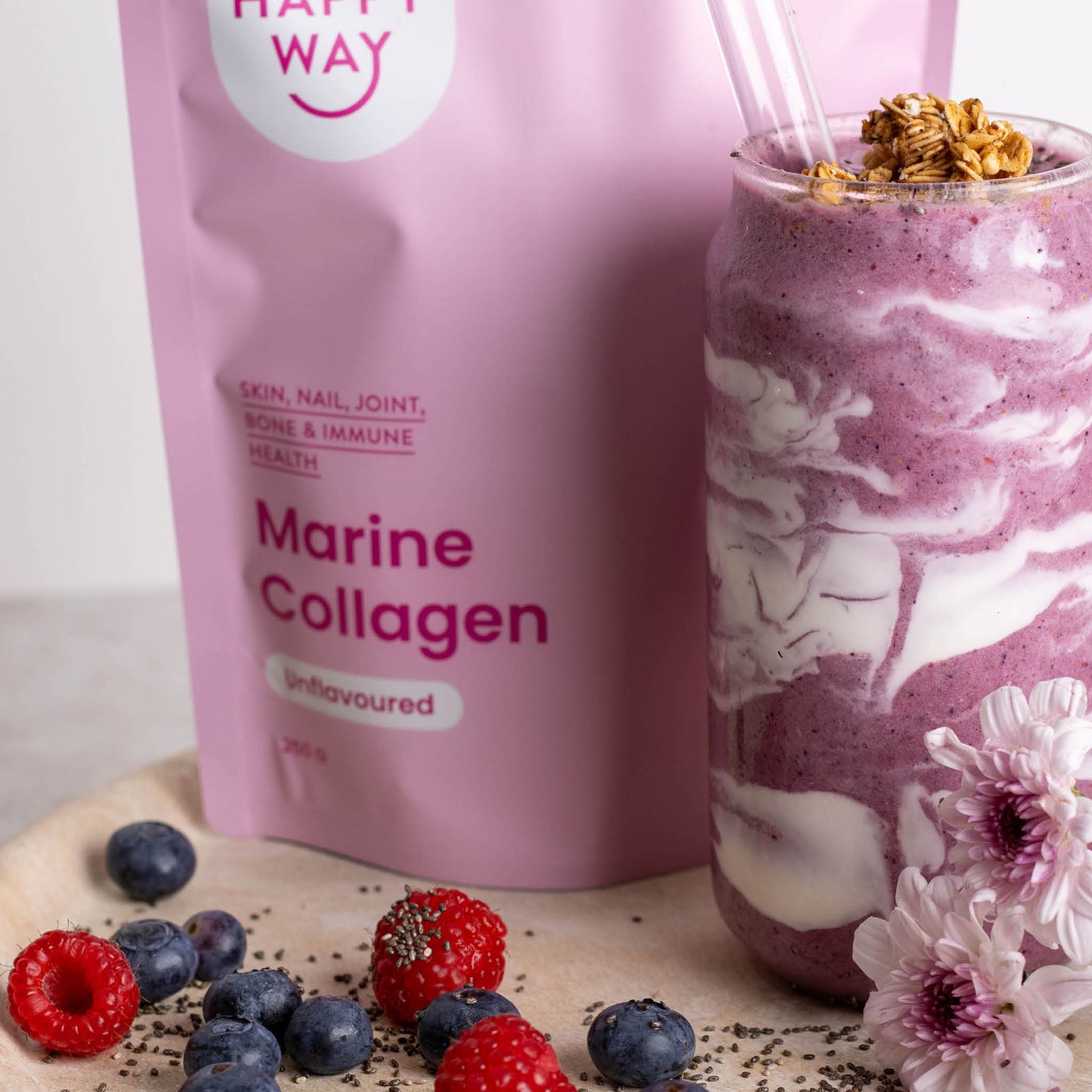
- Blend into smoothies: Add berries for a bonus hit of vitamin C, which helps support collagen production in the body.
WHY VITAMIN C MATTERS WHEN TAKING COLLAGEN?

Here’s a small but important detail many people don’t realise: Vitamin C plays a key role in collagen production. Your body needs vitamin C to help convert the amino acids from collagen into the collagen your skin, joints and connective tissue actually use. Without enough vitamin C, this process becomes less efficient.
This is why pairing collagen with vitamin-C-rich foods can be a simple way to support the process.
Easy vitamin C pairings include:
- Berries
- Citrus fruits
- Kiwi fruit
- Mango
- Pineapple
So adding collagen to a smoothie with fruit, stirring it into yoghurt with berries, or having it alongside a vitamin-C-rich meal is an easy way to support collagen production.
THE FINAL TAKEAWAY
Marine collagen isn’t a magic powder, and no supplement can replace the foundations of good health.Nutrition, sleep, movement, stress management and your overall lifestyle will always matter most. You can’t out-supplement the basics.
Marine collagen can be a part of your daily habit that supports your skin, joints and connective tissue as part of that bigger picture. Think of it as a small addition that complements the fundamentals, not replaces them.
Heidi x

Disclaimer: This information is general in nature and is not intended as personalised medical or nutrition advice. It should not be used to diagnose, treat, cure or prevent any disease. Supplements are not a substitute for a balanced diet and healthy lifestyle. Always consult your healthcare professional before starting new supplements, particularly if you have allergies, medical conditions, are taking medication, or are pregnant or breastfeeding.